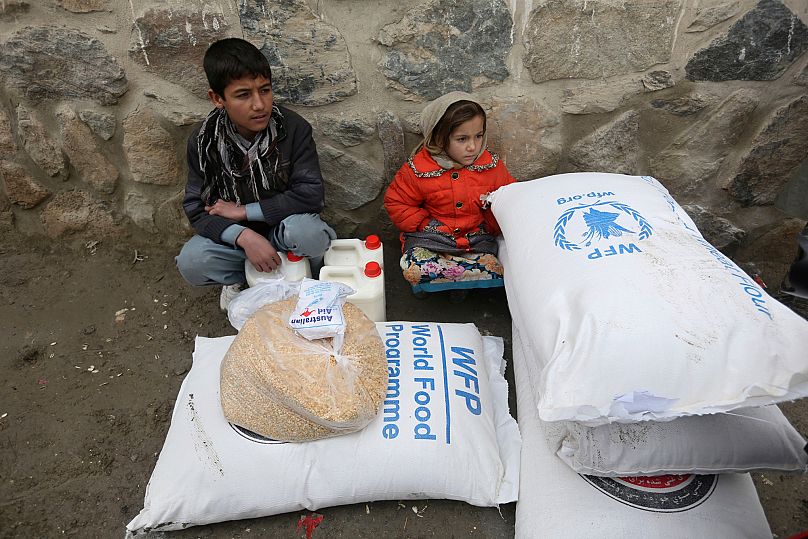
More than 17 million people in Afghanistan are facing crisis levels of hunger in the coming winter months, the leading international authority on hunger crises and the UN food aid agency warned on Tuesday.
Economic woes, recurrent drought, shrinking international aid and an influx of Afghans returning home from countries like neighbouring Iran and Pakistan have strained resources and added to the pressures on food security, reports the Integrated Food Security Phase Classification, known as IPC, which tracks hunger crises.
“What the IPC tells us is that more than 17 million people in Afghanistan are facing acute food insecurity. That is 3 million more than last year,” said Jean-Martin Bauer, director of food security at the UN’s World Food Programme, told reporters in Geneva.
“There are almost 4 million children in a situation of acute malnutrition,” he said by video from Rome.
“About 1 million are severely acutely malnourished and those are children who actually require hospital treatment.”
Food assistance in Afghanistan is reaching only 2.7% of the population, the IPC report says, exacerbated by a weak economy, high unemployment and lower inflows of remittances from abroad.
More than 17 million people, or more than one-third of the population, are set to face crisis levels of food insecurity in the four-month period through to March 2026, the report said.
Of those, 4.7 million could face emergency levels of food insecurity.
An already dire situation was made worse after a magnitude 6.0 earthquake struck Afghanistan’s eastern Kunar province in September, killing more than 2,200 people.
The quake prompted aid agencies in the worst affected areas to call on the international community to increase funding.
The European Union donated €1 million in humanitarian funding and 130 tonnes of in-kind assistance, while the United Kingdom gave £1 million to help.
Many traditional donor countries were slow to come forward with financial assistance, including the US which was once the largest humanitarian funder to Afghanistan until it gutted support earlier this year.
International funding to Afghanistan fell dramatically after the Taliban retook control of the country in 2021, with just 28% of the 2025 humanitarian funding target met by September.