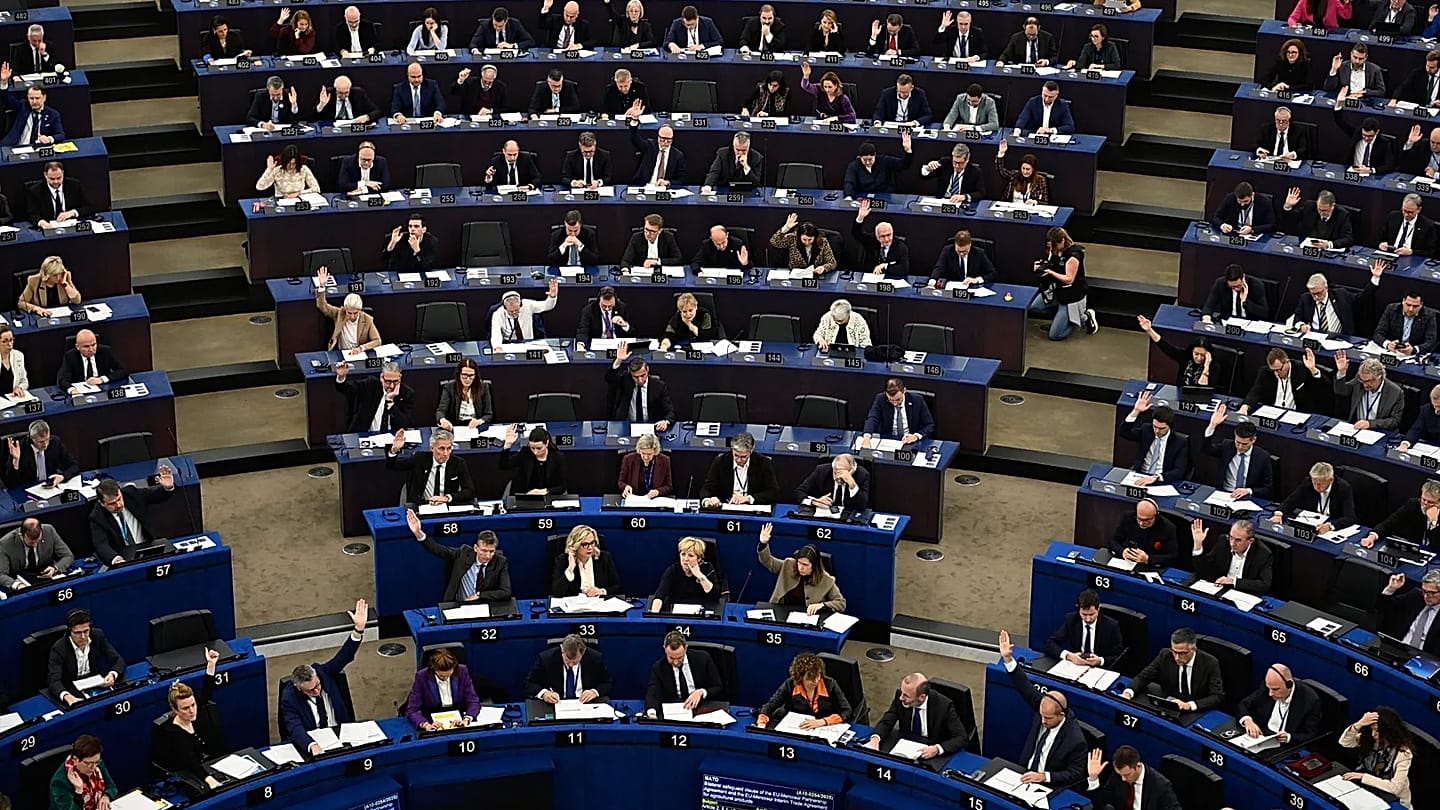
The European Parliament has formally expressed its “unequivocal support to Greenland and Denmark” in the face of United States President Donald Trump’s threats to “take the island, one way or another”.
A statement adopted on Wednesday by the Conference of Presidents, which comprises the leaders of the political groups, said the Parliament “unequivocally condemns the statements made by the Trump administration regarding Greenland, which constitute a blatant challenge to international law, to the principles of the United Nations Charter and to the sovereignty and territorial integrity of a NATO ally”.
“Such statements are unacceptable and have no place in relations between democratic partners,” it reads, rejecting “external attempts to alter the [Greenland’s] status quo” and calling on the European Commission and the EU member states “to define concrete and tangible support to Greenland and Denmark”.
This strong stance comes as the US steadily applies more pressure over Greenland’s future, with Trump insisting that ownership of Greenland should be transferred to his country.
“NATO should be leading the way for us to get it. If we don’t, Russia or China will, and that is not going to happen,” he posted on his social media outlet, Truth Social.
Meanwhile, Denmark is deploying military forces to bolster its presence on its island territory, while EU Commission President Ursula von der Leyen expressed her support for Greenland, sayingit “belongs to its people”.
The adoption of the statement by the Conference of Presidents means that the majority of the Parliament supports this position, even if not all its political groups do.
According to parliamentary sources, the statement was proposed by a “centrist majority”, including the European People’s Party, Socialists and Democrats, and Renew Europe.
Leaders exiting the meeting room refrained from disclosing which political groups have supported it, but sources say no clear opposition was shown.
The European Parliament will hold a debate on the topic during next week’s plenary session.