Warning: Contains spoilers
There’s a scene in The Bone Temple in which a character dressed in a blonde wig, shell suit and fairy wings does the Dipsy dance from Teletubbies, wiggling their bum as horrified bystanders await being skinned alive.
Such is the disorientating sadism of Nia DaCosta’s entry into the 28 Years trilogy: a brutal but beautiful film that brazenly clings to kindness in a world corrupted by rage and nostalgic rot.
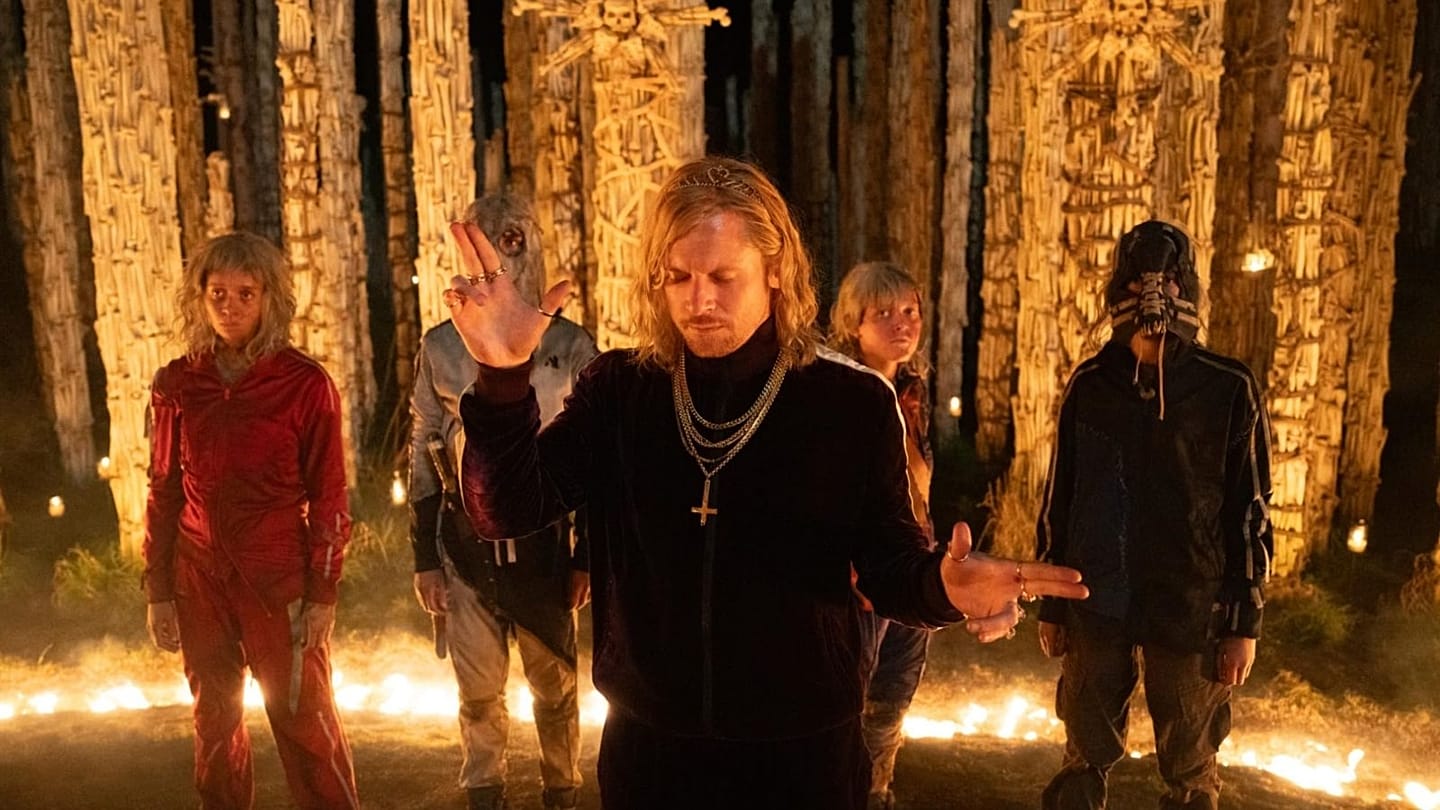
When we’re reunited with our young hero Spike (Alfie Williams), who last chose to remain on the mainland after his mother’s death, things aren’t looking good. He’s been abducted into a violent gang known as the Jimmies, led by slimy Sir Jimmy Crystal (Jack O’Connell, once again proving his aptitude for playing cold-blooded cult leaders).
Jimmy is crazy. Not in a fun, kooky way, but in a the-devil-is-my-father-and-asked-me-to-sacrifice-people kind of way. He calls it “charity”, instructing his followers to disembowel uninfected humans for “Old Nick”, who he also believes was responsible for the Rage Virus.
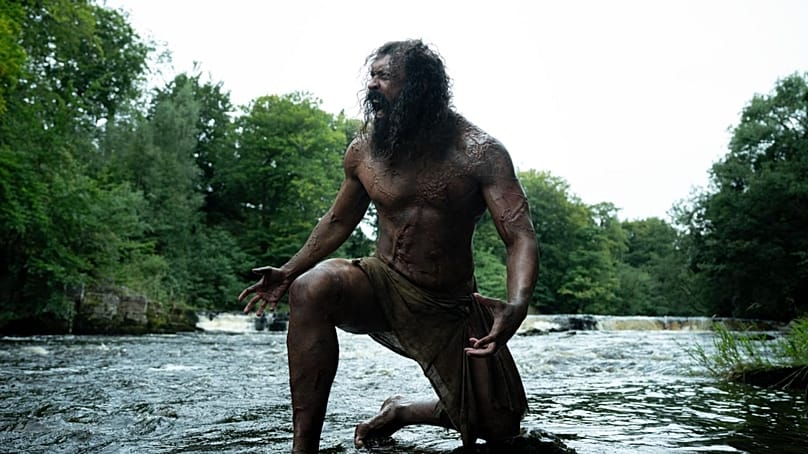
Meanwhile, Ian Kelson (Ralph Fiennes), a lone doctor who spends his days polishing bones for his ossuary, forms an unexpected bond with a spine-ripping Alpha (Chi Lewis-Parry), now addicted to the morphine shots Kelson uses for defence. Together, the pair get high, stargaze and dance to ‘80s music in strange, sweet spells of reprieve.
This two-pronged narrative structure plays out with volatile juxtaposition, humanity’s capacity for good and evil eventually colliding in a barnstorming dance with the devil (to Iron Maiden, no less).
Much like 28 Years Later, The Bone Temple feels far removed from its predecessors. The fuzzy footage and jittery grit of 2002’s 28 Days Later has been replaced with visuals so crisp and colourful they seem to bulge through the screen with sensory verve.
Then there are the zombies with zoomies – once core to the franchise’s fear factor, now merely a background inconvenience as worse terrors emerge.
The Rage Virus, now contained within a quarantined British Isles, has not only spawned several new evolutions of the Infected, but also a patchwork of survivors struggling to find purpose without order. Some cling to the things that once made them human, like Kelson with his record-filled bunker, while others are reshaped into a different kind of monster, like Sir Jimmy and his delusion-led killing sprees.
It’s here that the film reveals how tragedy can give rise to dangerous belief systems, weaving a web of interconnecting characters whose inner lives layer the apocalyptic landscape with emotional and thematic depth.
In an age of endless reboots, remakes and spin-offs, writer Alex Garland has managed what so few others have: a sequel that enriches its pre-existing franchise by daring to reflect the real world’s darkness.
Still frozen in the 2000s, the film allows us to measure our own experiences against those of its characters, using nostalgia to explore how people lose themselves in rose-tinted memories.
From Sir Jimmy’s seeming idolisation of a disgraced TV presenter, to the abandoned train carriage where Samson the Alpha recounts a long-lost memory – the husks of the past are everywhere, haunted by an unknown future.
Under DaCosta’s confident direction, the film becomes darker and weirder than ever before, with slow burn dread favoured over jump scares, and a tone that oscillates between gruesome grit and magical realism – reminiscent of Love Lies Bleeding‘s hulking finale.
Anchored by a knock-out performance by Ralph Fiennes, The Bone Temple blazes into what feels like psychosis; the striking set pieces, anachronistic soundtrack and costumed villainy manifesting as a surreal sort of Cirque du Satan.
Some might lament the lack of development given to Spike, whose coming-of-age arc laid the previous film’s emotional foundations. But this restraint feels necessary for a trilogy whose impact lives in its encounters along the way.
Every character introduced so far, no matter how minor, has been a clue towards a new direction. And as the film’s ending reveals, we’re finally headed full circle – back to where it all began…
Although we’ll have to wait a while. The conclusion is rumoured for release in 2027, with Danny Boyle returning to the helm.
Until then, the series’ power exists in the unsettling questions it leaves behind. We’d all like to believe that, if faced with similar circumstances, we’d be ok. That we wouldn’t turn to violence or self-destruction. But if living through a real-world pandemic taught us anything, it’s that people’s beliefs rarely align with the truth.
Pain begets pain, which in turn leads to blame, and the divide between kindness and cruelty widens.
As Dr Kelson says, “no one is Old Nick. There’s just us.”
28 Years Later: The Bone Temple is out in cinemas now