While 2025 saw tidal shifts in ocean governance, 2026 is the moment of reckoning, when promises to protect the most distant stretches of sea become reality.
Euronews reviews the year ahead for our blue planet.
High hopes for the high seas
From 17 January 2026, the distant ungoverned seas will no longer be the Wild West, at least as far as their legal status is concerned.
On this date, the High Seas Treaty, known to insiders as the BBNJ Agreement, comes into force. It promises a sea change for some of the wildest and most remote parts of our planet, where illegal fishing, human rights abuses and ecological destruction have occurred for decades beyond the horizon, out of reach of international law.
Ocean advocates, like Tiago Pitta e Cunha, CEO of theOceano Azul Foundation, don’t hold back in praising the deal. “We are having a kind of civilisational step forward by protecting the biggest part of the planet,” he tells Euronews.
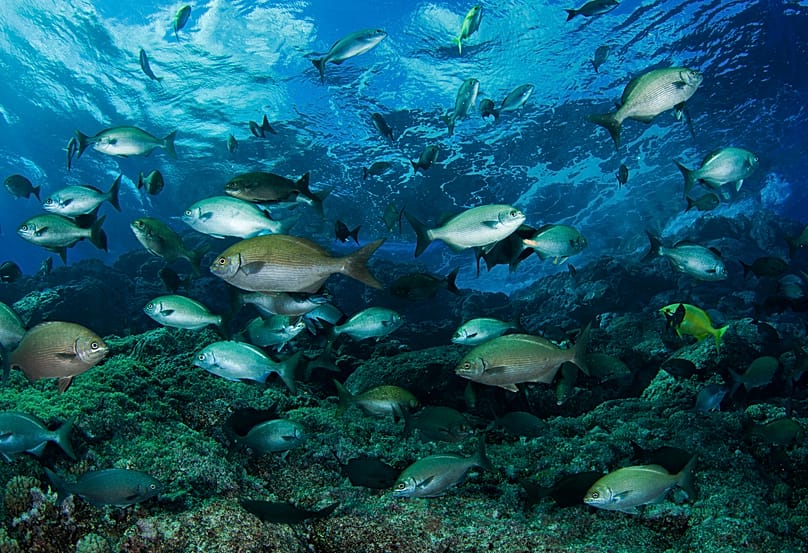
He’s not wrong when it comes to size and reach. The high seas make up over two-thirds of the world’s oceans, and until now they have been unevenly governed through a patchwork of regulatory bodies, some covering the seabed or ocean shelf, others overseeing shipping. The newHigh Seas Treatyseeks to plug the holes in some of the leakier parts of the legal net. It makes it possible to establish entities such as marine protected areas in international waters, share the benefits of yet-to-be-discovered marine genetic resources, require environmental impact assessments from signatories, and help developing countries boost their capacities.
2026 is crunch time because it will see the first Ocean COP, probably much later in the year, when the institutions are established to put the Treaty into practice.
“Getting the institutions right, while not particularly riveting, is really important,” says Liz Karan, director of Pew’s ocean governancework. The effect should be long-lasting.
“Unlike some agreements of the past few decades, the High Seas Treaty is rather robust; there’s a lot of detail, so it should set the stage for decades of conservation outcomes,” she says.
The European Commission is moving on with its adoption, too, with a draft directive already on the table to ensure that the BBNJ Agreement works for everyone. A Commission official told Euronews that the EU needs to ensure the deal “is implemented in the EU in a uniform manner, and offers a level playing field for all Member States and stakeholders, including for science and fisheries”.
The proposal was adopted by the European Parliament on 13 November 2025, and is now being discussed at the Council level.
Will European consumers benefit from the Treaty in 2026? Vanya Vulperhorst, Campaign Director for Illegal Fishing and Transparency at Oceana Europe, thinks it will make a difference.
“There is bottom trawling and unsustainable activity in the high seas,” she says. “So putting in place healthy and well-managed areas in the high seas helps the EU consume more sustainable seafood.”
While hopes are high for new Marine Protected Areas (MPAs), doubts over enforcement prevail.
“International law has no international police,” says Pitta e Cunha, “But with satellites you can name and shame, which you couldn’t do before”.
Even MPAs in national territorial waters are subject to industrial fishing, giving them the nickname ‘paper parks’. Vulperhorst is one of many voices calling for European leaders to do better.
“We urge the EU to first be exemplary and properly protect its own MPAs to set an example for those to come in the high seas,” she tells Euronews.
Will 2026 see deep-sea mining sink or swim?
The debate on whether to allow deep-sea mining will continue in 2026, with more countries expected to join the 40 nations which have already given a firm ‘no’ to the practice. Some, like France, have outright banned it, while others, like Germany and Spain, have imposed a precautionary pause. So will this future industry sink or swim in the next 12 months?
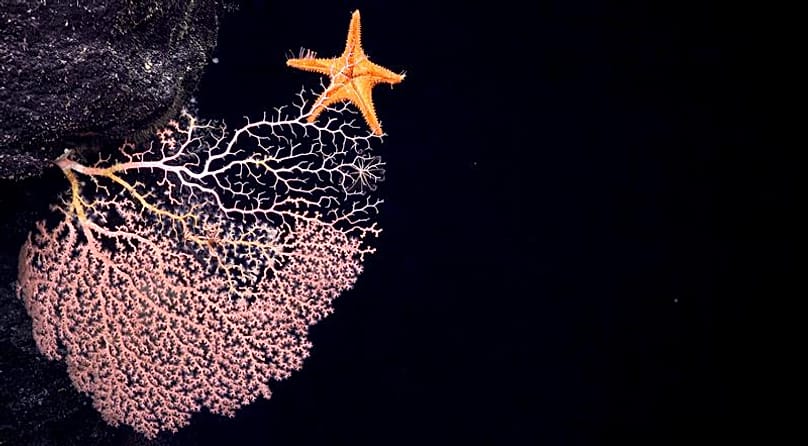
Environmental campaigners are keen to stress that what happens in the deep sea doesn’t stay in the deep sea. Miners may be able to recover precious mineral resources from the seabed, but they will disturb far more surface area than land-based mines, destroying previously unexplored ecosystems and polluting the water column with debris. Pitta e Cunha is categorical on deep-sea mining.
“It’s the ultimate irresponsibility of the human race,” he says.
US President Trump doesn’t see it that way, and in April 2025, he signedan executive orderstating that America “must take immediate action to accelerate the responsible development of seabed mineral resources”.
The European Commission’s position on deep-sea mining is for the activity to be prohibited “until scientific gaps are properly filled”.
“It is important to be cautious until it can be demonstrated that no harmful effects arise from mining,” a Commission source told Euronews.
This issue could end up in the courts. The mineral-rich plains of the high seas are governed by the UN’s International Seabed Authorityunder the United Nations Convention on the Law of the Sea, known as UNCLOS. However, the United States has not ratified that Convention. If the Americans begin seabed mining in international waters, they may be considered to be contravening international law.
For years, the International Seabed Authority has been holding talks to decide how to regulate deep-sea mining, and so far, no rules have been agreed upon. Negotiations will resume in 2026, and a growing number of voices are calling for ISA to take a strong stance against the miners.
One emerging argument is that the specific minerals and rare Earths that are found in deep-sea deposits can be recovered through recycling, mined less destructively on land, or, quite simply, be replaced by other, more easily accessible elements in future technologies. Another is that some large consumer brands and investors have publicly stated that they will not invest in or use minerals from deep-sea mining.
Either way, it’s a topic to watch in 2026, as coalitions of nations coalesce into more clearly defined ‘for’ and ‘against’ camps.
What can we expect from the ocean summits in 2026?
Large-scale international ocean conferences have faced calmer seas than their climate change counterparts in recent years, with the United Nations Ocean Conference in Nice, France, in 2025 attracting 64 heads of state and government.
Globally, there’s consensus that the life-support systems of our planet rely on healthy oceans, and there are expectations that ocean issues will continue to rise on the multilateral agenda. An extra motivation is that ocean conservation suits political timescales, as ultra-protected areas can see fish stocks and marine life recover in less than five years.
Climate change and degradation of nature continue to frame every conversation around ocean governance, and they are likely to be key topics at the WRI’s Our Ocean conferencein Kenya on 16 June 2026.
Held for the first time in an African nation, we can expect a big focus on the future of coastal communities, discussions on how to boost biodiversity and adapt to climate change effects such as rising sea levels and extreme weather.
Closer to home for Europeans, observers will be looking for advances on the EU Ocean Pact. Announced in 2025, it aims to bring together ocean policies such as boosting the blue economy, restoring the oceansand ensuring maritime security. The Pact will ultimately lead to an Ocean Act in 2027, which is a revision of the maritime spatial planning directive.
Environmentalists hope that the Act will finally outlaw bottom trawling in coastal areas and bring in legally binding provisions toprotect 30 per cent of European waters, with 10 per cent under strict protection. Finally, 2026 will also see new requirements in the EU Fisheries Control Regulation come into force, requiring tracking devices on 12 to 15-metre fishing boats and making sure data on seafood is passed digitally through the supply chain.
Fans of EU ocean policy will gather at the week-long European Ocean Daysfrom 2 to 6 March 2026 in Brussels and the World Conference on Marine Biodiversity in Bruges, Belgium, from 17 to 20 November 2026. So there will be plenty of opportunities to discuss how to best protect, preserve, restore and defend our common oceans from the multiple pressures they face.